skip to main |
skip to sidebar
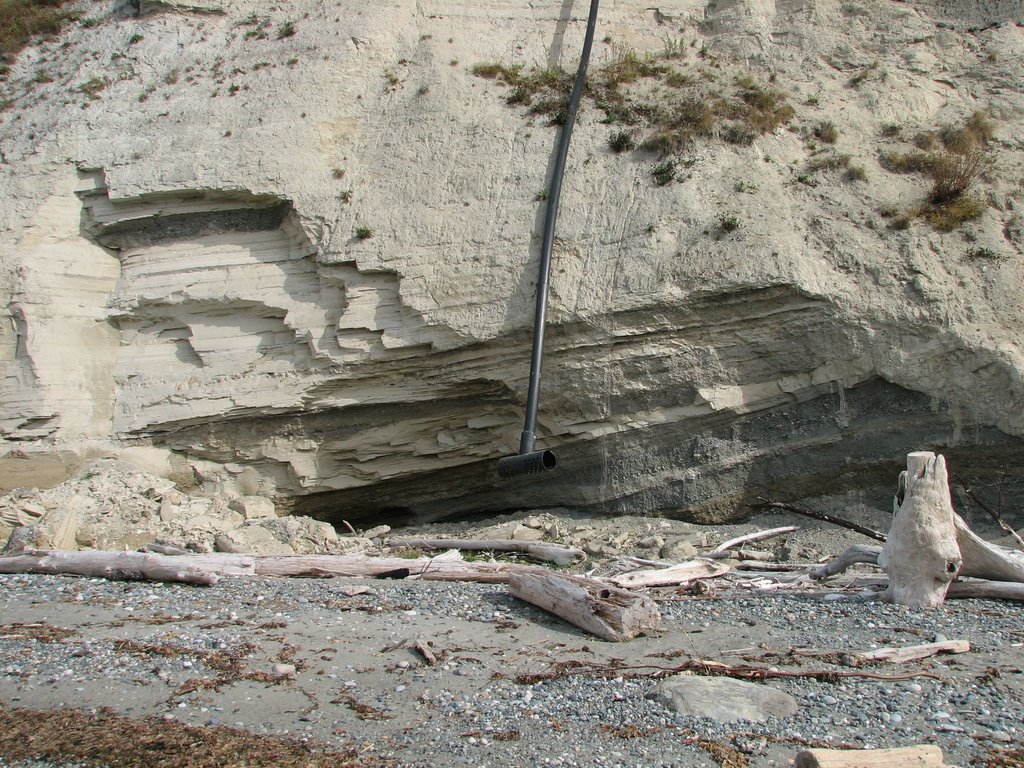
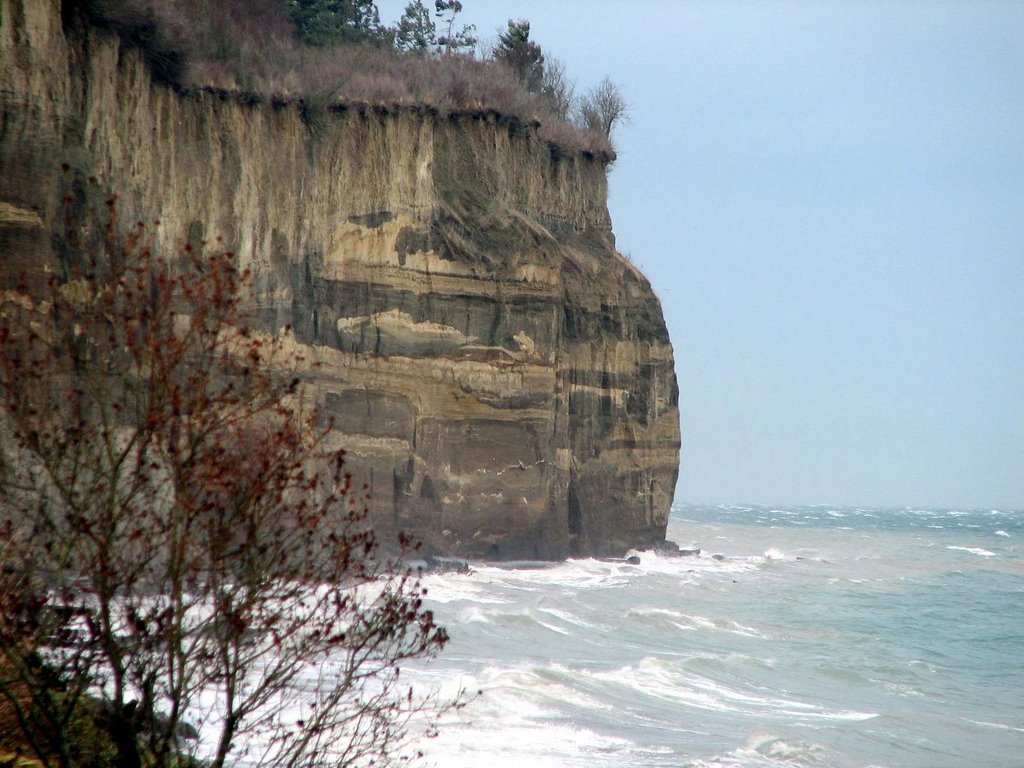
 We've caught up to December. This stretch of bluffs supplies sediment both south to Gibson Spit at the mouth of Sequim Bay and north toward Jamestown and the mouth of the Dungeness.
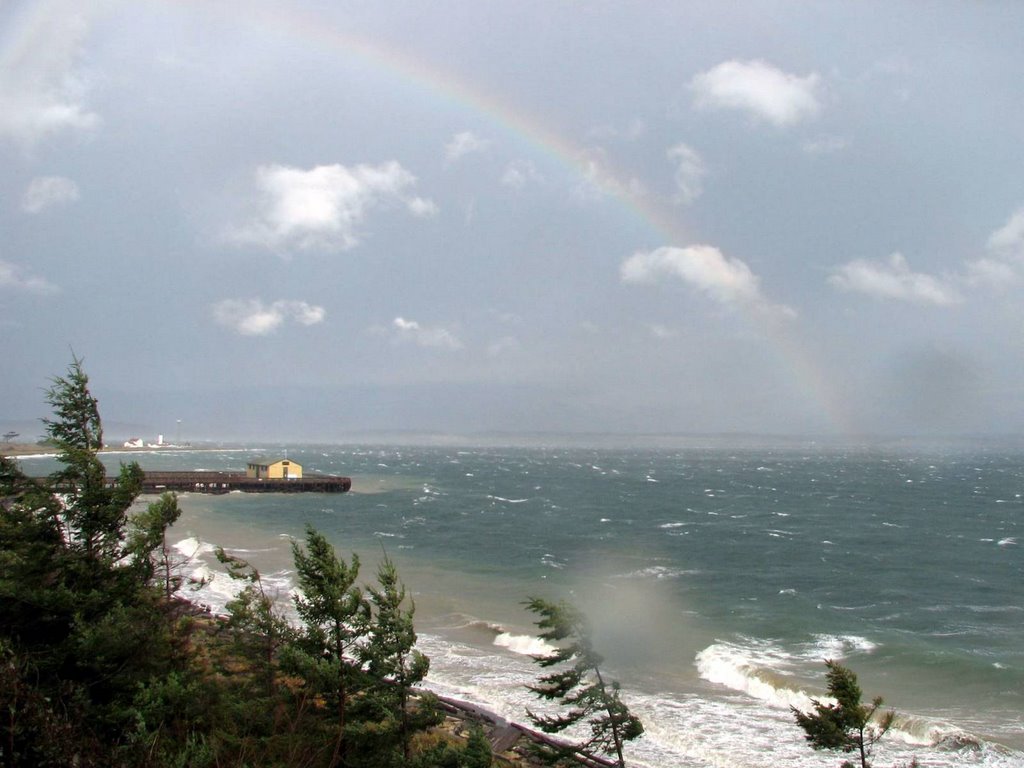
 The week of Thanksgiving. A miserable wet and windy day in Seattle, but a wonderfully blustery day on Port Susan. Seems like everyone wants their own private tram to cart them up and down their 150' bluffs, which is why we were out today. This is wonderful stretch of beach, particularly at low tide (which it wasn't this trip) when you look out across the front of the Stilliguamish Delta. The sand on the upper beach is moving north with longshore drift (waves from the south) but the low-tide terrace is really just part of the delta and is probably expanding to the south.
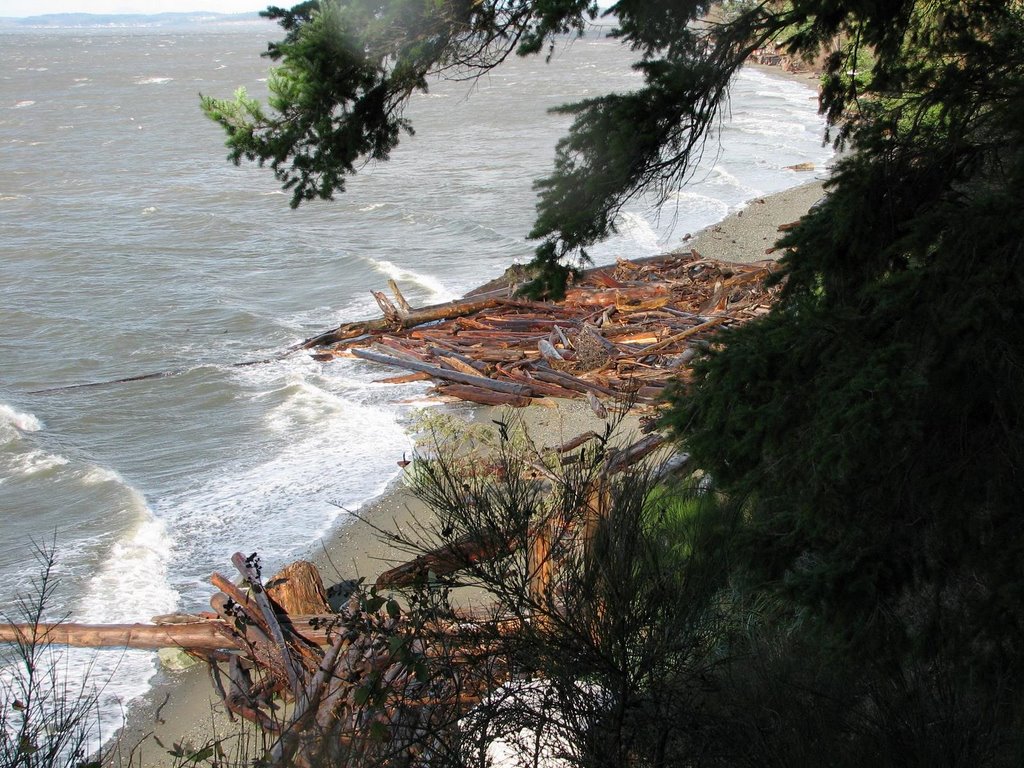
There is lots of big wood in Port Susan since it's north and downwind of Everett and the mouth of the Snohomish River. This was one of the largest log jams I've seen on a beach - it starts to act like a groin, impounding sediment and affecting local wave action.
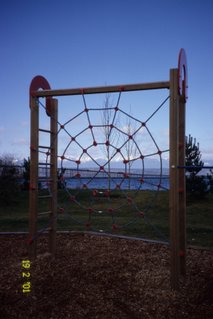
It's time to catch up a bit -- beginning with a blogger's retrospective. The picture was my best effort at something related to the web that was still taken near a beach. Salsbury Point. A great example of small-scale beach nourishment carried out in October 1995, though it could use a little refreshing. Deserves a future post.
I began this blog a little over a year ago - 60 posts and I suppose a couple hundred pictures. I don't even know if Google/Blogger limits my storage, or do they just keep adding servers on my behalf in big warehouses in places like eastern Washington with cheap land and cheaper electricity? Or maybe tomorrow they'll tell me I've exceeded my allotted space!
I have no idea how many people visit the site, though I don't expect many do unless I specifically point them to it. I know no one links to the blog, since it still fails to come up in any search engines (maybe a good thing). I think there is some way to subscribe to it, in case you want to get updated some evening when I start posting stuff after a two month hiatus. I think the site has actually served my needs very well -- I just enjoy pushing my pictures and my musings out there. Hopefully, some folks enjoy it or learn something about their favorite beach or come away with an idea for a thesis, but if someone doesn't like it, they can just click on the "Next Blog" in the top right and go visit someone else.

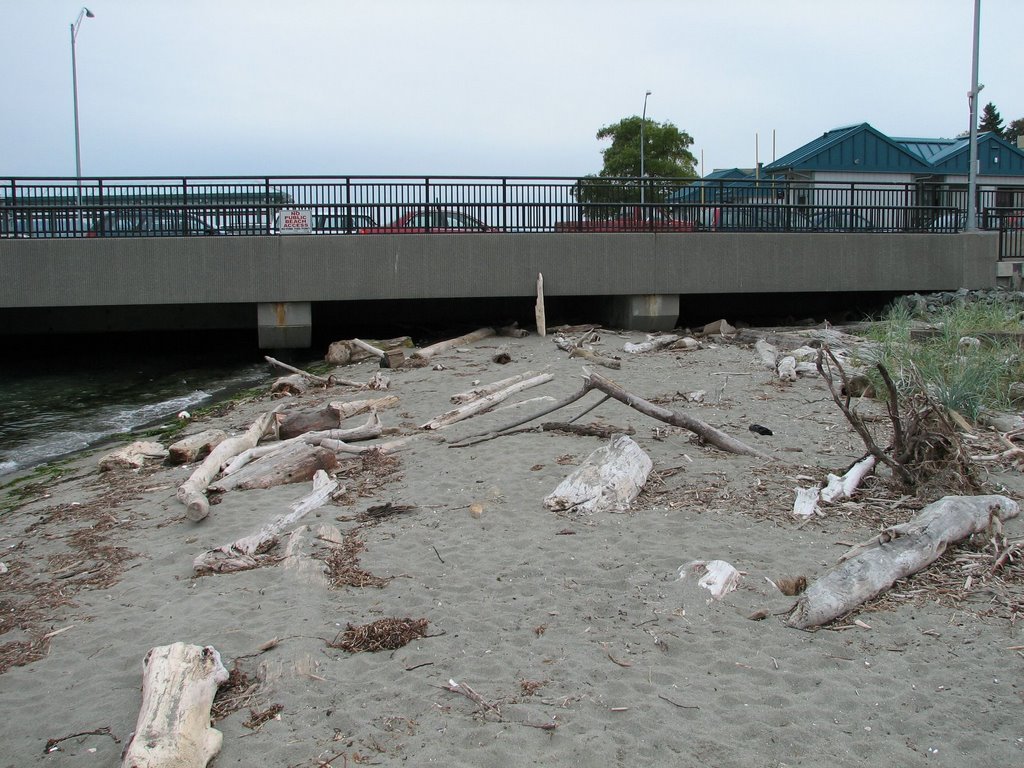
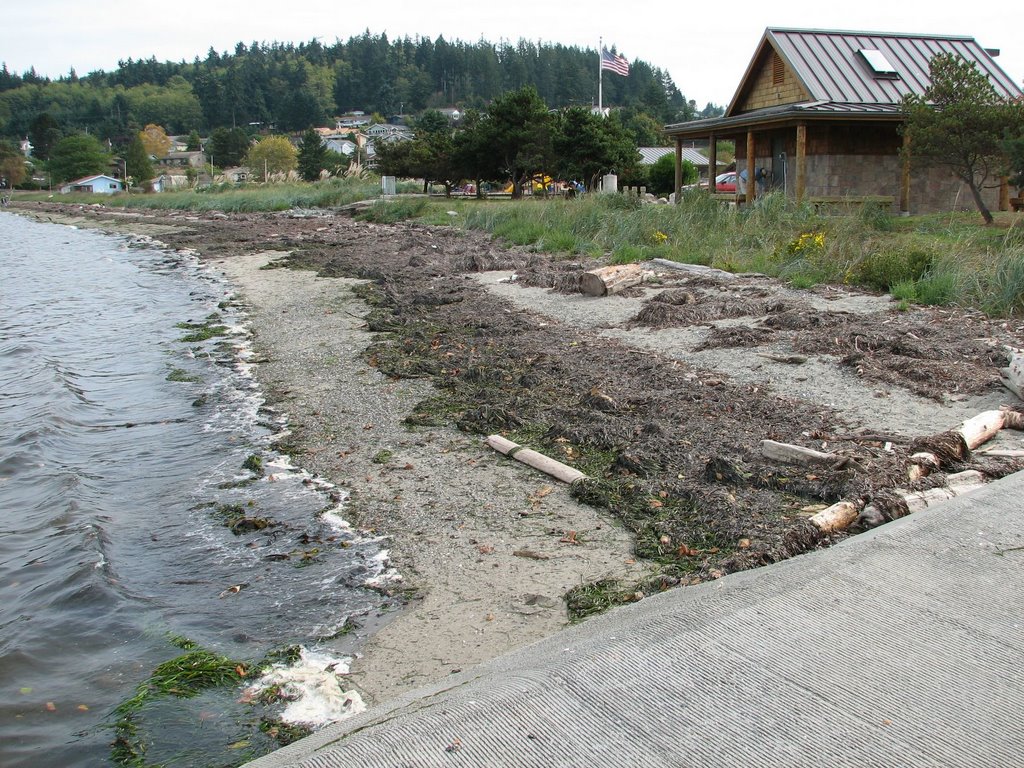
 Freeland. I've been swinging by this beach now and then to watch how it responds to the new stormwater outfall in the middle of the park (not terribly well, as the flows seem sufficient to carve a significant channel across the beach and transfer much of the sand offshore, which also results in erosion of bank adjacent to the outlet). This time, however, the beach was doing okay - other than it was blanketed with 6" of dead eelgrass. This is a typical autumn phenomenon, albeit one that varies significantly from year to year and that is probably more characteristic of some beaches than others.





.jpg)


 Freeland. I've been swinging by this beach now and then to watch how it responds to the new stormwater outfall in the middle of the park (not terribly well, as the flows seem sufficient to carve a significant channel across the beach and transfer much of the sand offshore, which also results in erosion of bank adjacent to the outlet). This time, however, the beach was doing okay - other than it was blanketed with 6" of dead eelgrass. This is a typical autumn phenomenon, albeit one that varies significantly from year to year and that is probably more characteristic of some beaches than others.