Showing posts with label acadia. Show all posts

Sunday, August 29, 2010

Schoodic Peninsula


I suspect Schoodic Point is best known for waves crashing on its rocky headlands and that was the primary reason that I raced to get here before the sun set on my overstuffed day in Acadia.


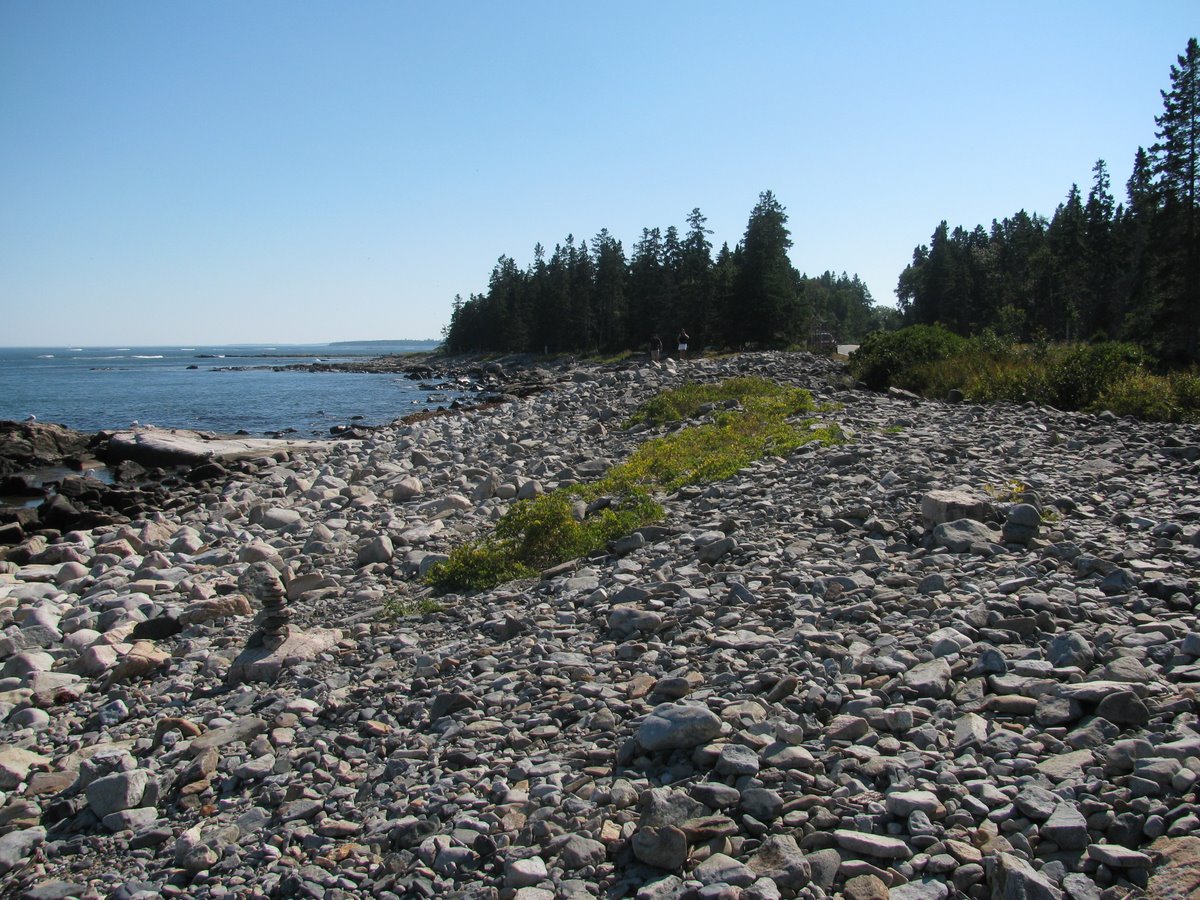
The sunset was great, the rocky ledges impressive (but the waves today were pretty small). But what really impressed me were the boulder berms on the east side of the Point. Boulders and huge cobbles stacked along the shore, offering some sort of hint at what winter storms must be like along here. If only I had left more time to explore them! When I do come back, I'll also want to check out the gravel barriers around the pond on the west side.

Seawall Beach


I guess there is something a little oxymoronic about the name of this place, but it is also an advertisement for the inherent stability of coarse gravel berms. The gravel and cobble are piled up into a variety of configurations along the back of these rocky platforms. These photos were all taken within half a mile of each other. And there isn't a seawall in sight.

Little Hunter's Beach


Little Hunter's Beach is located at a small stream mouth in a equally small cove near Schooner Head on the south edge of Mount Desert Island. Its truly a gravel beach, in contrast to Sand beach or the boulders and cobbles at Monument Cove. I suspect this has more to do with the nature of the glacial source of this material than anything else.

Even in today's calm conditions, you could hear the gravel rattling up and down with the waves and watch the swash get sucked into the steep, permeable beachface.

As we've moved west along this coastline, the pink granite of the Otter Cliffs have given rise to a dark schist.

Monument Cove


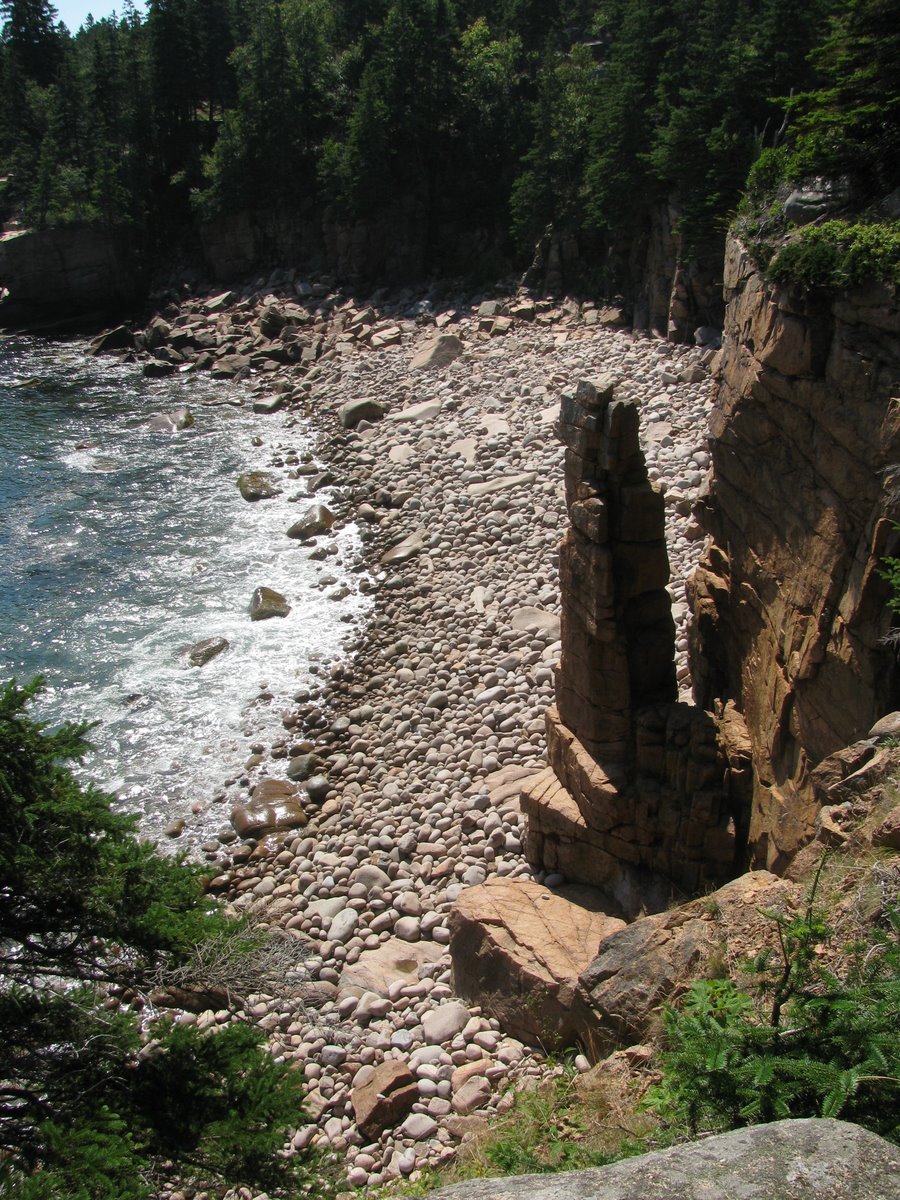
Monument Cove is a small pocket beach, hidden in a cove between Thunder Hole and Otter Cliffs. It would be easy to miss and it looks difficult to get down to (I didn't try). I've seen this beach in dozens of calendar pictures over the years and it's cool to see it for real.


The grain size is huge compared to Sand Beach, just a mile or so away, going to show that you can't predict beaches on gross characterizations of geology or wave energy. The details matter. Source and abundance of sediment, orientation, and simply the antecedent history of the particular beach.

Sand Beach


Acadia National Park and Mount Desert Island, and this portion of the Down East coast in general, are better known for its rocky headlands than for its beaches, but there are beaches, and each is very different than the next.


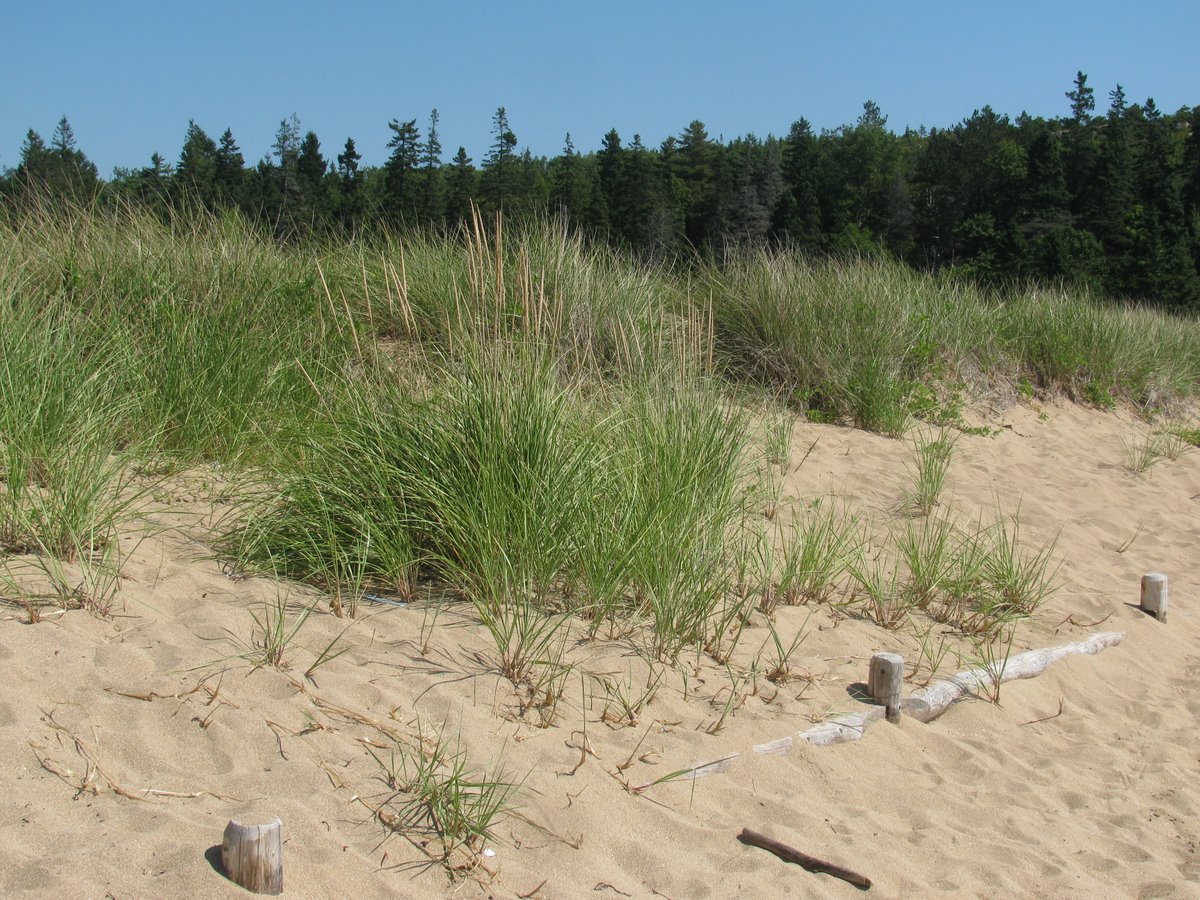
Sand Beach, is just that. The sand is mainly shell fragments. It is a pocket beach - actually a barrier - with what appears to be an occasional outlet at its easternmost end. The beach is backed by dunes and a lagoon, then by forest and rocky hills. The back of the beach, at least at each end, lay against a coarse cobble berm. I suppose this may be much better exposed in February after a stormy winter than in August.